
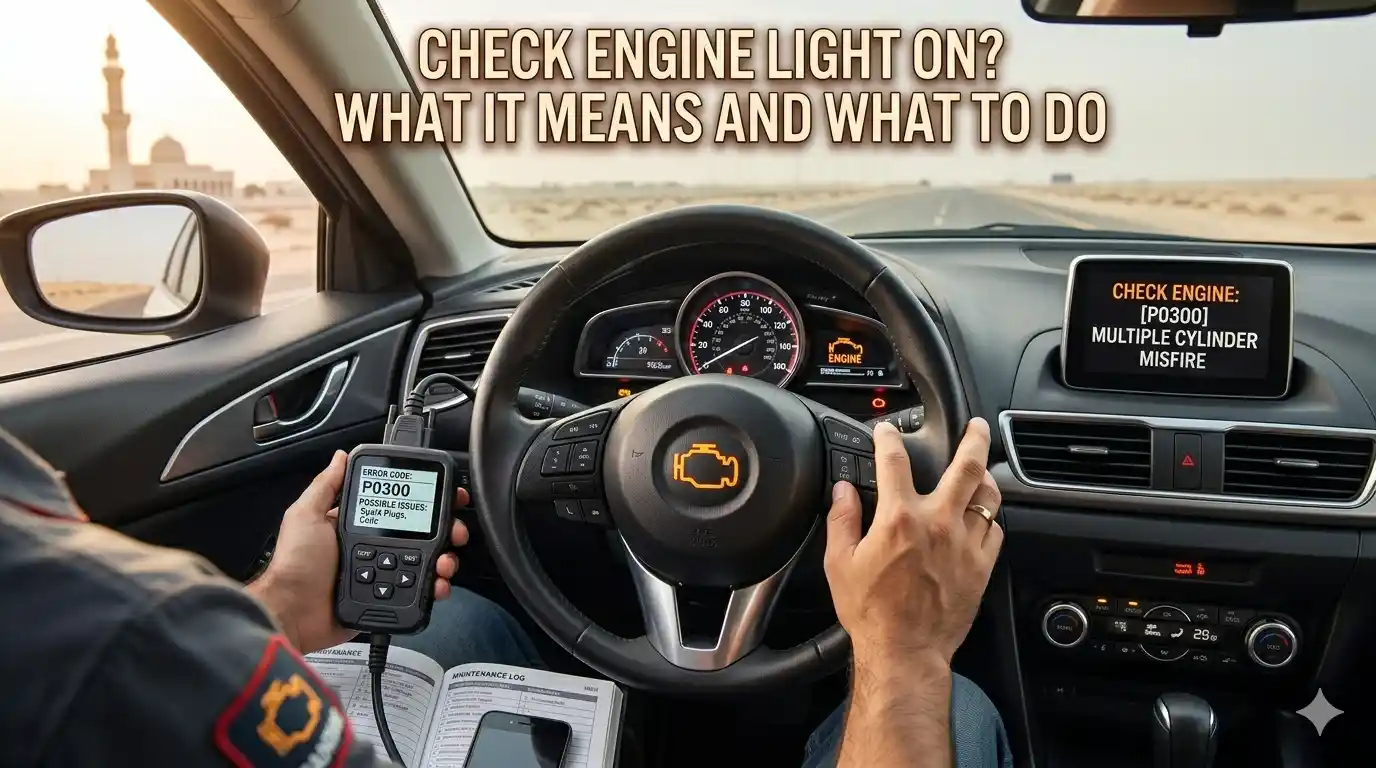
You’re driving to work, running errands, or heading out on a road trip when suddenly a small yellow engine-shaped icon appears on your dashboard.
Your check engine light is on.
For many drivers, this warning light triggers immediate anxiety. Does it mean your engine is about to fail? Is it safe to keep driving? Will the repair cost hundreds—or even thousands—of dollars?
The truth is that the check engine light can indicate anything from a loose gas cap to a serious engine misfire. While some causes are minor, ignoring the warning can lead to expensive repairs and vehicle breakdowns.
In this guide, you’ll learn exactly what the check engine light means, the most common reasons it turns on, what to do next, when to stop driving immediately, and how professional diagnostics can save you money in the long run.
What Is the Check Engine Light?
The check engine light (CEL), also known as the Malfunction Indicator Lamp (MIL), is part of your vehicle’s onboard diagnostics system (OBD-II).
Modern vehicles constantly monitor engine performance, emissions systems, fuel delivery, ignition timing, sensors, and other critical components. When the vehicle’s computer detects a problem, it stores a diagnostic trouble code (DTC) and illuminates the check engine light.
The light itself doesn’t tell you what’s wrong—it only indicates that the vehicle has detected an issue requiring attention.
What Does a Solid Check Engine Light Mean?
A solid or steady check engine light typically indicates a non-emergency issue that should be diagnosed soon.
In many cases, the vehicle remains drivable, but delaying repairs can worsen the problem and increase repair costs.
Common Causes of a Solid Check Engine Light
Loose or Damaged Gas Cap
One of the most common reasons for a check engine light.
A loose gas cap can cause fuel vapors to escape and trigger an evaporative emissions (EVAP) system fault.
Symptoms:
- Light appears shortly after refueling
- No noticeable driving issues
- Fuel smell near the vehicle
Faulty Oxygen Sensor
Oxygen sensors monitor exhaust gases and help regulate the fuel-air mixture.
Symptoms:
- Reduced fuel economy
- Rough idle
- Increased emissions
Mass Air Flow (MAF) Sensor Issues
The MAF sensor measures the incoming air entering the engine.
Symptoms:
- Hesitation during acceleration
- Poor fuel economy
- Engine stalling
Catalytic Converter Problems
The catalytic converter reduces harmful emissions.
Symptoms:
- Loss of power
- Sulfur or rotten egg smell
- Failed emissions testing
Evaporative Emission System Leaks
Leaks within the EVAP system commonly trigger check engine lights.
Symptoms:
- Fuel odor
- Emissions-related fault codes
What Does a Flashing Check Engine Light Mean?
A flashing check engine light is significantly more serious than a solid light.
In most vehicles, a flashing light indicates an active engine misfire severe enough to damage the catalytic converter. Continuing to drive can quickly turn a relatively minor repair into a major expense.
If Your Check Engine Light Is Flashing:
- Reduce speed immediately.
- Avoid hard acceleration.
- Pull over safely.
- Turn off the engine if performance is poor.
- Arrange professional diagnostics as soon as possible.
Common Causes of a Flashing Check Engine Light
Failed Spark Plugs
Worn spark plugs can prevent proper combustion.
Faulty Ignition Coils
A bad ignition coil often causes cylinder misfires.
Fuel Injector Problems
Faulty injectors can disrupt fuel delivery.
Engine Compression Issues
Internal engine damage can lead to persistent misfires.
Vacuum Leaks
Unmetered air entering the engine can create severe running issues.
Can You Drive With the Check Engine Light On?
The answer depends on how the vehicle behaves.
Usually Safe for Short-Term Driving
You can typically drive cautiously if:
- The light is solid
- No unusual noises exist
- The vehicle accelerates normally
- There is no smoke
- Engine temperature remains normal
Stop Driving Immediately If:
- The light is flashing
- The engine is shaking or vibrating
- Power loss occurs
- Smoke is visible
- Strong fuel odor exists
- Engine temperature rises
Driving with these symptoms may cause significant engine or catalytic converter damage.
Top 10 Reasons Your Check Engine Light Is On
1. Loose Gas Cap
Simple, inexpensive, and surprisingly common.
2. Faulty Oxygen Sensor
One of the most frequent causes of CEL warnings.
3. Bad Spark Plugs
Affects ignition efficiency and performance.
4. Failed Ignition Coil
Can trigger misfire codes.
5. Catalytic Converter Failure
Often develops after prolonged misfire issues.
6. Dirty Mass Air Flow Sensor
Leads to inaccurate airflow readings.
7. Vacuum Leak
Creates fuel-air imbalance.
8. Faulty Fuel Injector
Impacts engine performance.
9. EVAP System Problems
Common emissions-related fault.
10. Transmission-Related Issues
Certain transmission faults can trigger the check engine light.
What Should You Do When the Check Engine Light Comes On?
Step 1: Stay Calm
Not every check engine light indicates catastrophic engine failure.
Step 2: Observe Vehicle Behavior
Ask yourself:
- Is the light solid or flashing?
- Is the engine running rough?
- Has fuel economy changed?
- Is acceleration affected?
Step 3: Check the Gas Cap
Tighten the gas cap until it clicks.
In many cases, the light will turn off after several drive cycles.
Step 4: Scan Diagnostic Trouble Codes
Use:
- OBD-II scanner
- Professional diagnostic equipment
- Auto parts store code scan
Remember: fault codes indicate where to begin diagnosis—not necessarily the failed part itself.
Step 5: Schedule Professional Diagnostics
Accurate diagnosis prevents unnecessary parts replacement and saves money.
Common Check Engine Light Codes and Their Meaning
| Code | Description |
|---|---|
| P0300 | Random engine misfire |
| P0301-P0308 | Cylinder-specific misfire |
| P0420 | Catalytic converter efficiency below threshold |
| P0171 | Engine running too lean |
| P0172 | Engine running too rich |
| P0440 | EVAP system malfunction |
| P0455 | Large EVAP leak detected |
| P0130 | Oxygen sensor circuit malfunction |
How Much Does It Cost to Fix a Check Engine Light?
Repair costs vary significantly depending on the root cause.
| Problem | Estimated Cost |
| Gas Cap Replacement | $10-$50 |
| Oxygen Sensor | $150-$500 |
| Spark Plugs | $100-$400 |
| Ignition Coil | $150-$600 |
| MAF Sensor | $150-$500 |
| Fuel Injector | $200-$1,200 |
| Catalytic Converter | $1,000-$3,000+ |
Early diagnosis often prevents expensive secondary damage.
How to Prevent Future Check Engine Light Problems
Follow Recommended Maintenance
Routine maintenance helps prevent many common CEL issues.
Replace Spark Plugs on Schedule
Ignoring worn ignition components often leads to misfires.
Use Quality Fuel
Poor-quality fuel can contribute to combustion and emissions issues.
Address Small Problems Early
Minor symptoms often become major problems when ignored.
Perform Regular Vehicle Inspections
Professional inspections help identify issues before warning lights appear.
Signs You Should Visit a Mechanic Immediately
Seek professional help immediately if you notice:
- Flashing check engine light
- Severe vibration
- Engine stalling
- Smoke from exhaust
- Burning smells
- Major power loss
- Poor acceleration
- Knocking noises
These symptoms often indicate urgent mechanical issues.
Frequently Asked Questions
Why did my check engine light come on suddenly?
The vehicle’s computer detected a fault in one of its monitored systems. Common causes include a loose gas cap, oxygen sensor failure, ignition problems, or emissions-related faults.
Can a check engine light turn off by itself?
Yes. If the issue resolves itself or was temporary, the vehicle may turn the light off after several successful drive cycles.
Will disconnecting the battery reset the check engine light?
Sometimes, but this only clears stored codes temporarily and does not fix the underlying problem.
Can low engine oil cause a check engine light?
In some vehicles, low oil levels or oil pressure issues can trigger warning lights and diagnostic codes.
Is a flashing check engine light serious?
Yes. A flashing light often indicates a severe engine misfire that can damage the catalytic converter if ignored.
How long can I drive with a solid check engine light?
A solid light is generally less urgent, but you should arrange diagnostics as soon as possible to prevent further damage.
Can bad spark plugs trigger the check engine light?
Yes. Worn or damaged spark plugs commonly cause misfires that trigger check engine fault codes.
Conclusion
A check engine light doesn’t always mean disaster, but it should never be ignored.
A solid check engine light typically signals a fault that requires diagnosis soon, while a flashing check engine light demands immediate attention. The key is identifying the root cause early before a minor issue becomes a costly repair.
If your check engine light has appeared, don’t guess and don’t simply clear the code. Professional diagnostics can pinpoint the problem, protect your vehicle from further damage, improve fuel efficiency, and save you money over the long term.