
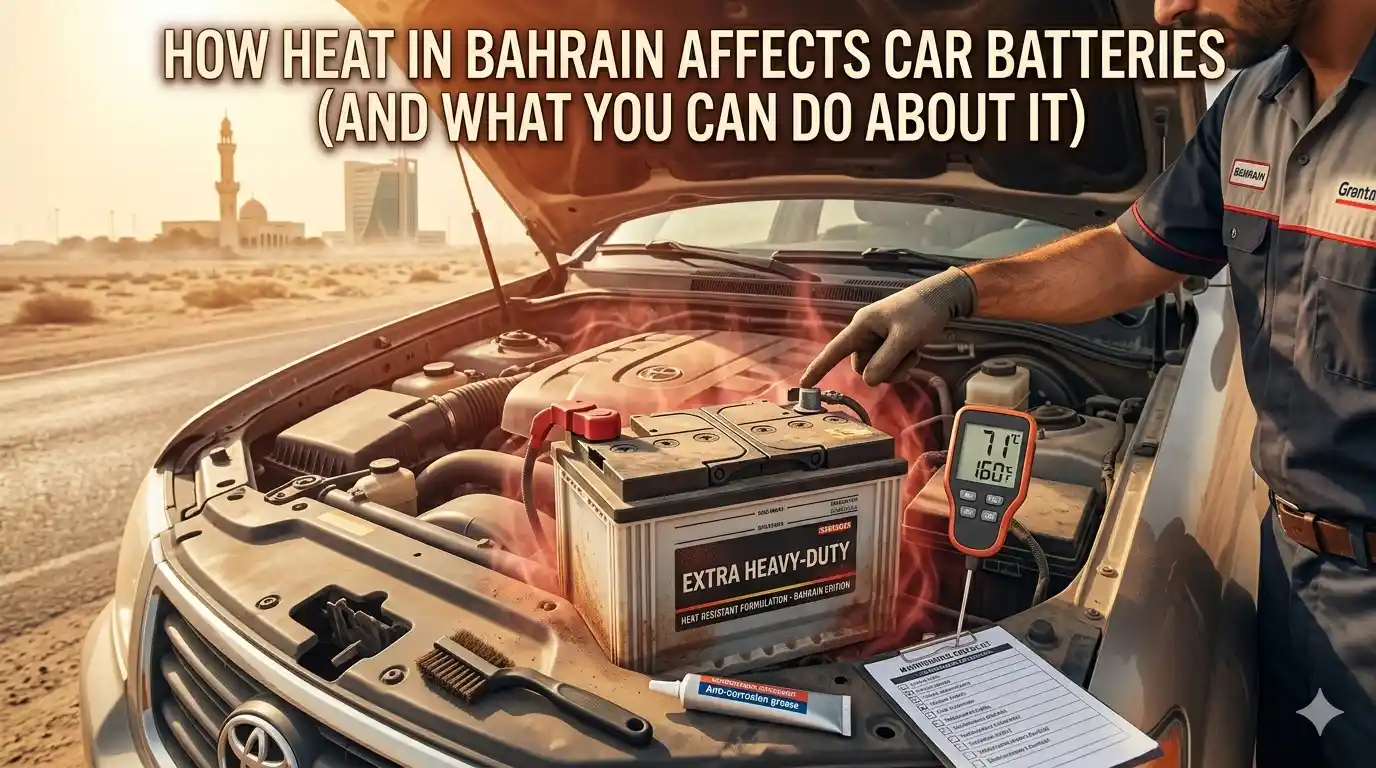
If you live and drive in Bahrain, you’ve probably experienced a car that suddenly won’t start, especially during the hotter months. Many drivers assume batteries fail because of winter conditions, but in Bahrain and across the GCC, extreme heat is often the bigger problem.
High temperatures place constant stress on your vehicle’s battery and can shorten its lifespan much faster than expected.
Why Bahrain’s Climate Is Tough on Car Batteries
Car batteries work through chemical reactions. While moderate warmth helps battery performance, prolonged exposure to high temperatures speeds up chemical activity inside the battery.
That may sound beneficial—but excessive heat actually causes batteries to wear out faster.
During Bahrain’s hot months, temperatures inside a parked vehicle can rise significantly above outdoor temperatures. Over time, this heat can:
- Accelerate internal battery degradation
- Cause battery fluid to evaporate
- Increase corrosion around battery terminals
- Reduce the battery’s ability to hold a charge
- Shortens the overall battery lifespan
For many drivers, battery problems appear suddenly—but usually the damage builds gradually over months.
5 Signs Heat May Be Damaging Your Battery
1. Slow Engine Cranking
If the engine takes longer than usual to start, your battery may be losing capacity.
2. Dashboard Battery Warning Light
Never ignore this warning. It may indicate charging or battery system issues.
3. Electrical Features Acting Strange
Dim headlights, slow power windows, or infotainment resets can indicate weak battery performance.
4. Frequent Jump Starts
Needing repeated jump starts is often a sign your battery is nearing the end of its life.
5. Swollen or Distorted Battery Case
Extreme heat can physically damage the battery housing.
How Long Does a Car Battery Last in Bahrain?
Battery life depends on driving habits, vehicle type, and maintenance, but hot climates often reduce expected battery lifespan compared with cooler regions.
If your battery is several years old and showing early warning signs, testing it before summer can help avoid unexpected failure.
How to Protect Your Car Battery in Hot Weather
You can’t eliminate heat, but you can reduce unnecessary stress.
Park in Covered Areas
Shade helps reduce under-hood temperatures.
Drive the Car Regularly
Vehicles left unused for long periods may experience battery discharge.
Keep Battery Terminals Clean
Corrosion can interfere with charging performance.
Avoid Excessive Electrical Load
Running accessories while idling adds strain.
Schedule Battery Testing
Routine inspections can detect weakening performance before failure.
Does Heat Affect Electric and Hybrid Vehicles Too?
Yes—but differently.
Traditional car batteries and high-voltage systems operate differently, but all vehicles benefit from proper thermal management and regular inspections.
Always follow manufacturer maintenance recommendations.
When Should You Replace Your Battery?
You don’t always need to wait until the car refuses to start.
Consider a battery inspection if:
- Starting becomes inconsistent
- You notice electrical issues
- The battery is aging
- Summer temperatures are approaching
Preventive maintenance is usually easier than dealing with a roadside breakdown.
Final Thoughts
Bahrain’s climate can be challenging for vehicle batteries, but most failures don’t happen overnight. Recognizing early signs and performing simple maintenance checks can help extend battery life and reduce the chance of being stranded.
If you suspect battery issues, professional testing can confirm whether your battery still performs reliably—or whether replacement should be considered before problems occur.