
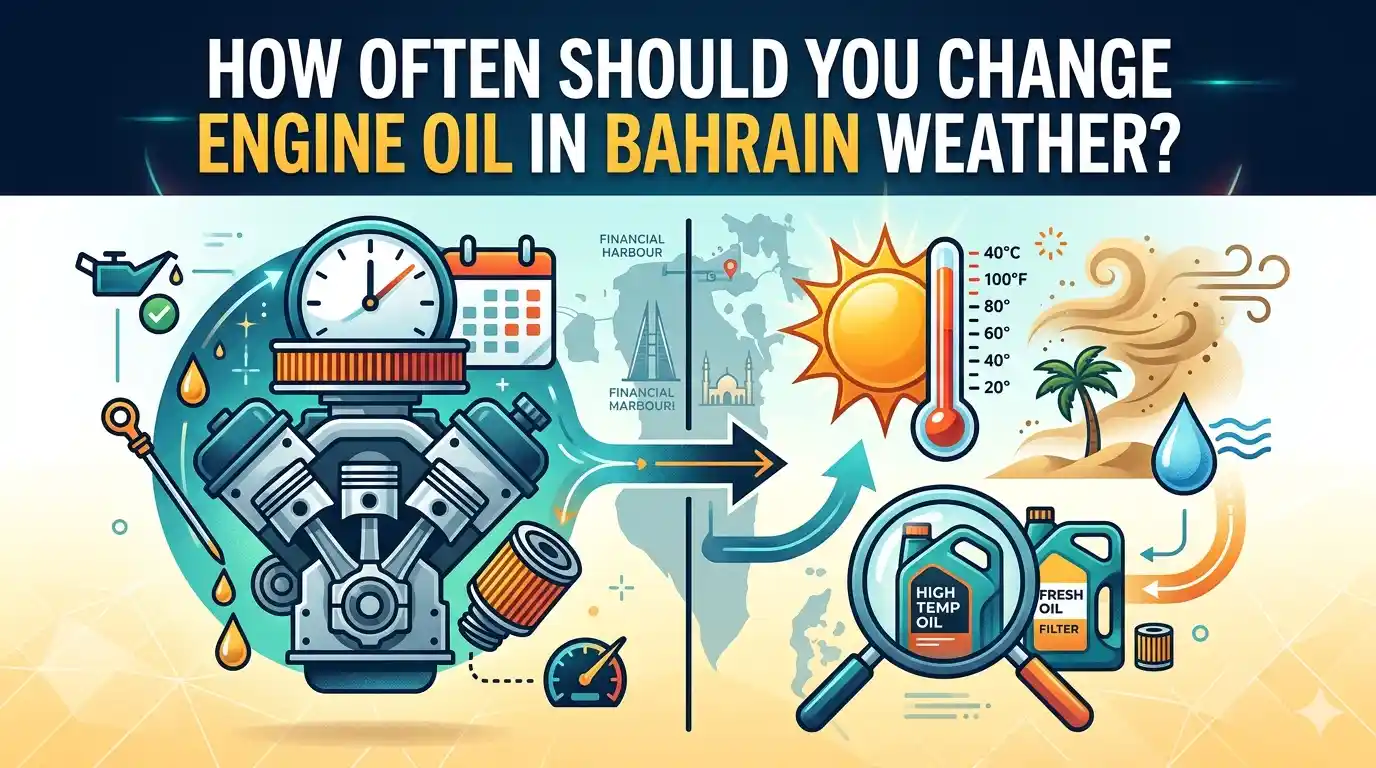
Engine oil is one of the most important fluids in your car. It keeps the engine lubricated, reduces friction, and prevents overheating. But in a hot climate like Bahrain, engine oil degrades faster than in cooler countries.
That’s why many drivers in Bahrain unknowingly wait too long between oil changes, leading to engine wear, poor performance, and expensive repairs.
In this guide, we explain how often you should change engine oil in Bahrain weather and how to protect your engine with the help of a trusted and best mechanic or specialist workshop.
Why Bahrain’s Weather Affects Engine Oil
Bahrain’s extreme heat, dusty conditions, and stop-and-go traffic all put extra stress on engine oil.
High temperatures cause oil to:
- Break down faster
- Lose viscosity (become thinner)
- Reduce lubrication efficiency
- Burn faster in older engines
Dust and sand in the environment also contaminate oil more quickly, especially if air filters are not regularly replaced.
Standard Oil Change Interval (Global Rule vs Bahrain Reality)
In many countries, engine oil is typically changed every:
- 10,000 to 15,000 km (modern synthetic oil)
- 5,000 to 7,000 km (conventional oil)
However, in Bahrain and similar GCC climates, these intervals should be shorter due to heat stress and driving conditions.
Recommended in Bahrain:
- Synthetic oil: every 7,000 – 10,000 km
- Conventional oil: every 4,000 – 6,000 km
If you drive in heavy traffic, short trips, or harsh summer conditions, even more frequent changes may be needed.
Signs Your Engine Oil Needs Changing
Even if you haven’t reached the mileage limit, watch for these warning signs:
1. Dark or Dirty Oil
Clean oil turns dark over time—but very thick, dirty oil is a warning sign.
2. Engine Noise
Increased knocking or rough engine sound can indicate poor lubrication.
3. Oil Warning Light
Never ignore the oil pressure or oil level warning light.
4. Reduced Performance
Sluggish acceleration or overheating can be linked to old oil.
5. Exhaust Smoke
Blue or dark smoke may indicate oil burning inside the engine.
Driving Habits That Affect Oil Life in Bahrain
Your driving style matters as much as mileage.
Oil degrades faster if you often:
- Drive in heavy traffic (stop-and-go conditions)
- Take short trips where the engine doesn’t fully warm up
- Leave the car idle for long periods with the AC running
- Drive in extreme summer heat
- Carry heavy loads regularly
These conditions are very common in Bahrain, which is why frequent oil changes are important.
Why Regular Oil Changes Save You Money
Delaying oil changes might save a small amount now—but can lead to:
- Engine overheating
- Increased fuel consumption
- Engine sludge buildup
- Expensive engine repairs or replacement
Regular maintenance from a trusted mechanic or specialist workshop in Bahrain ensures your engine stays protected and efficient.
Choosing the Right Engine Oil
Not all engine oils are the same.
You should always:
- Use manufacturer-recommended oil grade
- Prefer high-quality synthetic oil for Bahrain heat
- Avoid mixing different oil types
- Replace the oil filter with every oil change
The best mechanic in Bahrain can recommend the correct oil based on your vehicle type and driving conditions.
Final Recommendation
In Bahrain’s climate, engine oil should never be treated as “long-term maintenance.” Heat, dust, and driving conditions reduce oil life significantly.
As a general rule:
👉 Change oil every 5,000–10,000 km depending on oil type and driving conditions
👉 Always inspect oil condition regularly
👉 Visit a trusted, experienced mechanic specialist for routine checks
Regular oil changes are one of the simplest ways to extend engine life and avoid costly repairs.